

There are several types of primary care physicians (PCPs) you can choose from. It’s important to find the right type of physician for your individual health needs. Hear from Valerie Ko, Director of Nursing at Hill Physicians, as she explains how choosing the right type of care can help you get the care you need while saving time, money, and stress.
Hill Physicians Offers Five Levels of Quality Care
1. It Starts with Primary Care
Every patient who signs up with Hill Physicians Medical Group is connected with a primary care doctor. It’s important to schedule an annual visit with your primary care physician so they get to know you, learn about your concerns and goals, help manage your medications, get you caught up on vaccinations and schedule your annual wellness screenings.


2. Do you need a Specialist?
Perhaps you have an illness or ailments that require a specialist’s care. Your primary care physician can refer you to myriad medical experts in our vast Hill Physicians Network. Need a dermatologist? Someone to help you with pain? A gynecologist? An expert in eyes, ears, nose or throat? Whether you are dealing with heart health, cancer, back pain or broken bones, Hill Physicians experts are ready to assist.
3. Virtual Solution is a Real Solution
If your primary doctor cannot see you in a timely fashion, and waiting just isn’t an option, Hill Physicians Virtual Care program is available seven days a week, from 8 a.m. to 6:45 p.m. with many same-day doctor appointments. Most insurance plans are accepted for this service, which puts a Hill Physicians doctor within digital reach. It’s ideal for issues such as cold, fever, flu and COVID.
Book a Virtual appointment

4. If It’s Really Urgent…
Urgent Care is a great option when you need immediate help, but your situation is not life-threatening. Urgent care centers are staffed by licensed clinicians and often have extended hours. They can treat conditions like:
Common urgent care conditions
- Back pain and body aches
- Cuts and abrasions, including stitches
- Fever, colds, coughs, sore throats, sinus problems and earaches
- Minor asthma attacks
- Nausea, vomiting, diarrhea and minor abdominal pain
- Painful urination
- Pink eye
- Sprains, strains and minor broken bones
- Constipation
- Insect and animal bites
- Skin allergies and rashes
5. Emergency Rooms – For the Most Critical Cases
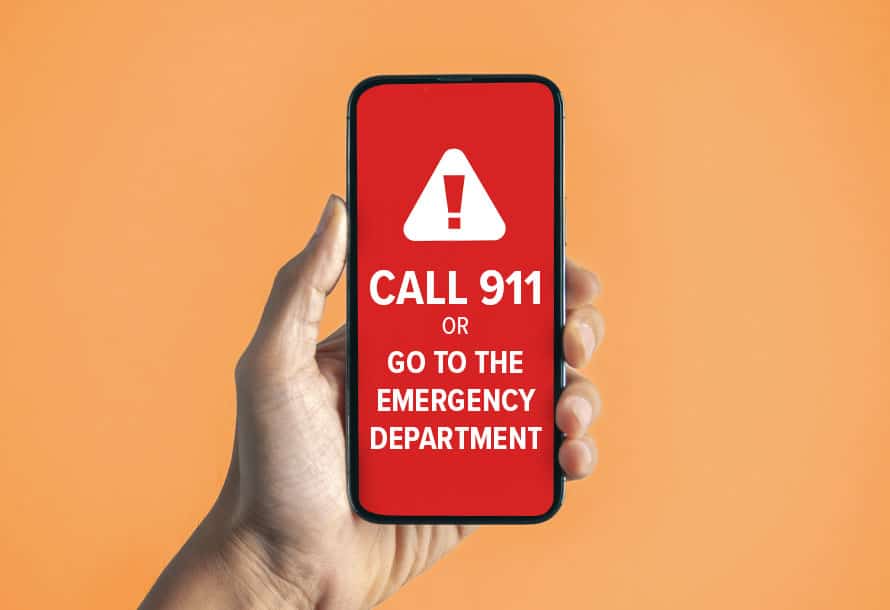
Emergency Rooms are intended for individuals suffering life-threatening conditions or serious medical issues that require immediate medical care. Emergency Department staff are trained to “triage” cases — that is, to assess and determine which are most critical. The most critical go to the head of the line, while others with less urgent issues wait for extended periods of time before they can see a doctor.
Go to the emergency room or call 911 for:
When to go to the ER or call 911
- Loss of consciousness
- Severe bleeding
- Severe abdominal pain
- Difficulty breathing
- Chest pain or heart attack
- Stroke, weakness or numbness on one side
- Head injury or other major trauma
- Poisoning
- Seizure
Hill Physicians partners with 30 hospitals in Northern California. Please note, if you need emergency services, by law you are entitled to receive help from any hospital, regardless of your insurance, membership, ability to pay, race, color, national origin, sex, religion, disability or age.